Friday, November 9, 2018

Cardboard - Book Review

TenNapel, D. (2012). Cardboard. NY: Scholastic
Mike is a hardworking carpenter who is out of work and looking for jobs.  After being turned away from work, Mike is on his way home, not knowing what he will be able to afford for his son’s birthday gift.  He pulls over to a vendor, Gideon, and ends up purchasing cardboard with two rules from Gideon.  1) You must return every scrap you don’t use.  2)  You can’t ask him for more cardboard, this is all he may have.  Gideon convinces Mike the cardboard will be a great gift for a good boy because he can be creative and use his imagination.  Mike, and his son Cam, learn very quickly there is something magical about this cardboard.  After making a boxer character, he comes to life!  Cam names him Bill and the two are instant friends.  Bill mows yards and teaches Cam how to box, while Cam’s neighbors, Marcus and Pinkeye, watch and become very envious of this cardboard magic.  They damage Bill by spraying water on him which ruins his cardboard body.  Mike and Cam must quickly save Bill by first asking Gideon for more cardboard.  Gideon is furious with Mike for not following his rules and denies any help.  Mike rushes home and creates a “card board maker” out of the cardboard, and is able to magically get cardboard by the push of a button.  The two save Bill, and Cam is able to make more little cardboard characters.  Marcus and Pinkeye devise another plan and they steal the cardboard maker and make several monsters that eventually overturn Marcus’ power of control.  The characters are thrown into a cardboard nightmare and must fight their way out.  Water is the weapon they must use to defeat the cardboard monsters but that also means Bill will be destroyed as well.  Marcus realizes he needs to change his act and apologizes for his behavior and Cam is thrilled and surprised to meet Bill, a man looking for work who coincidentally has a cut on his arm. 
This graphic novel was extremely entertaining.  The plot of the story moves quickly and was engaging.  The variety of panels from full page to wordless was visually pleasing and easy to follow.  Although this is a fun read, there was aspects of family moving on after Cam’s mother passed away, the love of a father and the disappointment of not being able to provide, and a wealthy family thinking their son does no wrong.  I love the surprise at the end with Bill showing up as a human.
Doug TenNapel is not only a graphic novel author, he is also a video game designer and television show developer.  Readers can learn more about his works on this website:  http://tennapel.com/


The 5th Wave Book Review


Yancey, R. (2013). The 5th wave. NY: Penguin House Company
Cassie is a 16 year old survivor of an alien invasion.  This post-apocalyptic story is set after the Others have already done four waves of mass destruction to earth, killing billions of humans.  Cassie can only imagine what the 5th Wave will be.  Told from multiple points of view, readers learn what life is like for several characters and how they all come together at the end.  The main character, Cassie, has already lost her parents in the previous Waves, and is living in the woods, alone, with the sole purpose of saving her younger brother Sammy.  Cassie trusts no one thanks to the 4th Wave, where the aliens invaded the human race, causing humans to become their own enemy.  Cassie’s story begins with searching for water and finding an injured soldier who was dying from a wound.  She does not trust he is human and shoots him, realizing later he was only holding a cross, not a weapon.  Cassie knows she is beginning to lose herself in this world she must survive.  As Cassie moves on to find her brother, she is shot in the leg by a Silencer who has been following her.  Cassie is near death when Evan comes in and saves her.  Cassie is suspicious of Evan and with good right because she later learns Evan is in fact a Silencer who loves Cassie and will rebel against his alien commands.  Readers will read from the point of view of Ben Parish who changes his name to “Zombie”.  Ben and Cassie went to school together and she even had a major crush on him.  Ben shares his story of being a victim of the plague that came through with a Wave.  He is slowly dying at a refugee camp then he is taken to a military camp and is healed.  There, he meets Sammy, Cassie’s brother, and wants to help him find his sister.  Ben (Zombie) shares a more darker side of the invasion.  All the stories and adventures eventually come together at the end of the novel and Cassie and Sammy are reunited.
I had very mixed emotions about this first book of the series.  I usually love when a book changes the point of view of characters and love figuring out how they will come together, however it was a little confusing at times to realize which perspective the reader was hearing from.  The characters switch from present day activities to flashbacks to previous Waves.  I found myself more interested in wanting to learn about the events that took place before where the book starts from.  The introduction titled “Intrusion: 1995” hooks the reader from the start as it describes the invasion of the Others on the human race, leaving no trace or evidence that it even happened.  I especially loved the bond of siblings in this novel with Cassie and Sammy.  Cassie was determined to keep going for her younger brother.  Survival stories intrigue me as a reader and I love to imagine which characteristics of Cassie I would have.  The novel leaves readers on a cliffhanger, which is appropriate being it is the first book of a series. 
Readers will enjoy the second and third books, “The Infinite Sea” and “The Last Star” to finish this series. 


Friday, November 2, 2018

Chapters 11-15 Textbook Reflection


Chapter 11:  Realistic Fiction
Realistic Fiction can also be referred to as Contemporary Realistic Fiction (CRF) or Modern Realistic Fiction (MRF).  It is set in modern or contemporary times, it believable, and everything in the story is consistent with the real world including characters, setting, and events. 
There is criteria for evaluating realistic fiction for children:
1.       Is everything consistent with the real world in which contemporary and modern kids live?  Is there speech, behavior, and every element consistent?
2.      Does the theme emerge naturally from the story?  A good piece of realistic fiction encompasses more than one theme and it should emerge slowly and consistently.
3.      How does the topic or subject matter of the book relate to modern readers?  Does it tackle sensitive and tough topics such as death, loss, sexuality and sexual orientation, changing of family structure, or more?  Topics that use to be taboo are now becoming the subject matter of books for young readers.
I love reading and recommending realistic fiction to readers and I have never thought about what criteria I am basing my recommendations on.  I simply think the book is “good” or look at awards or recognitions the book has received.  Although that is a good place to start, knowing the criteria for which finding great literature for children is based on allows me to be a more effective librarian.  What stood out to me most was looking at what the topic or subject matter of the book is about and how it would relate to modern readers.  I have found that these “taboo” subjects are what makes this genre so personal for readers.  Readers are able to relate in these subject areas or build empathy by looking through the lens of another character.  I also feel theme is a major component in realistic fiction.  As an educator, I see the impact of teaching theme and finding literature with a strong sense of theme can change readers and perspectives. 
Chapter 12:  Nonfiction
Nonfiction may include biographies, autobiographies, memoirs, narratives, and expository texts.  Dr. Robert Small said nonfiction is the only kind of book that is defined by what it is not.  There is certain criteria for evaluating nonfiction for children.  The first is qualifications of authors.  A reader can find information about the author in the back of the book, in the author’s notes, or even on their website.  Check to see if they put in the research for the topic.  The next criteria is are the facts accurate?  We must rely on the authors because we are not experts on the topic.  A reader may look at resources to learn more about the author and topic.  A great activity would be to have students select multiple sources on the same topic.  Students could make a chart to find what facts every source had, facts only a couple of books had, and facts only one book had.  This teaches children to do their own research and to be informational literate.  We must also consider what the purpose of the scope of this particular piece of nonfiction is.  What age groups does it address and is it a broad topic or narrow?  What need does it meet?  Another criteria for nonfiction is the organization of the book and how it assists kids in finding answers to their questions.  The literature needs text features that are user friendly and pleasing to the eye.  Call out boxes are especially beneficial for those who may be overwhelmed with all the written information on a page, but is able to view a small piece.  Some questions to consider when evaluating nonfiction is:
What would the text be like if it was written 50 years earlier or 50 years later?
Would this make a good documentary?
What do you think the author did to write this book?
What kind of teacher do you think this author would make?
Book Scenario:
Based on criteria used for evaluating nonfiction for children, “Perfectly Normal” should be considered for publishing.  The author has done the research behind the information presented in this book which you may read in the resources and references in the text.  The scope of the text is broad in that it presents information on changing bodies and sexuality, but can also narrow down to specific issues.  The organization is pleasing to the eye.  The book is full of text features and visuals that give information in a delicate, but honest way.  The text allows readers to easily find the information they are looking for quickly so they will not waste their time searching.  If a reader wants fast information, the text features provided will guide them to that information.  Children need to know and understand that their changing bodies are “perfectly normal” and this text is an excellent source to find reliable information presented for children.
Chapter 13 Fantasy/Science Fiction
Fantasy is stories that violate the laws of physical reality.  Science fiction is a subgenre of fantasy.  All science fiction falls into the fantasy genre, but not all fantasy falls in with science fiction.  There is criteria for evaluating fantasy and science fiction for children:
1.       Despite the fantastic aspects of the story, characters must behave in consistent and believable ways.
2.      There must still be rules for the fantasy world.
3.      Authors must assist readers in the “willing suspension of disbelief.”
4.      The theme should explore universal truths.
There is something for everyone in the science fiction subgenre.  There is “hard” sci-fi, which includes made up worlds and beings, and there is “soft” sci-fi, which is more about the plot and characters.  There are several categories of science fiction:
-        Apocalyptic and post apocalyptic:  dealing with the catastrophe or living in it many years later
-        Steam punk:  involving steam powered energy
-        Cyberpunk:  involves hacking and computer technology
-        Bio-punk:  involves hackers with humans; can manipulate DNA; genetic engineering
-         Dystopia:  involves propaganda for control of citizens; withholding information from citizens; society to have the illusion it is perfect but with many underlining problems
-        Extra-Sensory Perception:  (ESP); using the mind to do things
-        Robot, android, cyborgs, and artificial intelligence
-        Space and aliens:  extra-terrestrials
-        Time travel, parallel universe:  Scientific method to time travel
-        Virtual reality and gaming
-        Miscellaneous: anything else could fit here
Understanding genres and subgenres is an important tool for a librarian.  A librarian must know the different subgenres to better build her collection and provide books for readers’ interest.  Understanding what genre or subgenre allows librarians to make a more effective book recommendation.  I personally appreciate the knowledge of each subgenre because it narrows book topics for recommendations.  If a child tells me they enjoy science fiction, there is a wide range of material I could recommend.  When I understand how each genre and subgenre is related, I will be able to use time more efficiently. 

Chapter 14:  Graphic Novels
Graphic novels is not a genre, it is a form or a format.  Graphic novels have evolved to span from readers from young elementary years, to secondary students, and to adult literature.  A survey said that 67% of teachers do not read graphic novels.  But larger and larger numbers of readers are preferring graphic novels.  By definition, a graphic novel is in comic format that resembles a novel in length and has a narrative development.  Graphic novels do not have to be used for learning, they can be used for just pure enjoyment.  Graphic novels combine text and illustration to convey the story.  They can be fiction or nonfiction.  Just like other novels, graphic novels have parts of the book.  The gutters play an important role in graphic novels because it helps separate what is on the page so the reader can view the panels and comprehend the story line.  Readers read graphic novels from left to right and from top to bottom.  Scaffolding comes easily with graphic novels because of the assistance the illustrations give the reader. 
As a reader and an educator, I am a huge fan of graphic novels.  As a teacher, I have loved watching some of my reluctant readers finally find literature they enjoy and will read.  I do know some teachers who do not allow students to read graphic novels for their independent reading.  My question to them has been, are students still having to comprehend what they are reading?  Are students able to recall character development, theme, plot, and other literary elements?  I personally love that readers must use everything on the page in order to comprehend the text.  As a reader, I have loved reading graphic novels and exploring genres in the format of a graphic novel.  I have especially loved reading biographies in the format of a graphic novel.  I have realized I can expose students to different genres in the format of a graphic novel and maybe they would not be so reluctant to read it. 

Chapter 15:  10 Questions To Ask About A Novel by Richard Peck (1978)
l. What would the story be like if the main character were of the opposite sex?:  This helps diffuse sexual polarizations and stereotyping.
2. Why is the story set where it is? (Not where is the story set?):  This points out setting as an author’s device.
3. If you were to film the story, would you use black and white or color and WHY?:  This helps with the consideration of tone.
4. If you could not use all of the characters, which would you eliminate and WHY?:  This helps identify characters which add texture vs. simplification for media translation.
5. How is the main character different from you?:  This helps the reader to identify without being like the main character.
6. Would this story make a good TV series? Why/not?:  This helps with an ending focus and sequential nature of chapters.
7. What one thing in the story that has happened to you?:  This helps with anecdotal response of recognition.
8. Reread the first paragraph of Chapter 1. What is in it to make you read on? If
nothing, why did you continue to read?:  This hooks the reader and awareness of author’s intent in writing.
9. If you had to design a new cover for the book, what would it look like?:  Deceptive packaging and consumerism.
10. What does the title tell you about the book? Does it tell the truth?:  Titles as narrative hooks vs. symbolic titles.
As a reading teacher, I am a huge fan of these questions.  I tried a few of them out on my 4th graders this week as we read passages.  I was amazed with their thinking and response.  I asked my students, “why is the setting set where it is?”  Students were able to make the connection to the importance of the setting and how it relates to the plot.  I also asked my students what was one thing that happened to you that happened in the text.  Students were able to relate to the text and make text to self connections.  My favorite question I used this week was “how is the main character different than you?”  This question allowed students to see through another lens.  They were also able to make those text to self connections and compare and contrast.  The students enjoyed the discussion over these questions and they made for engaged literature circles.  My goal is to include these questions while discussion all literature with students.  As a future librarian, using these questions will help create a culture of reading on my campus.  Students will be encouraged to engage in the text. 


Thursday, October 25, 2018

Paper Towns - Book Review


Green, J. (2008). Paper towns. NY: Penguin Group
Quentin Jacobsen lives next door to Margo Roth Spiegelman, a beautiful and adventurous friend.  The two are just 9 years old and out riding their bikes together when they discover a dead body of a grown man.  Quentin is frighten and reacts how one would expect to react, but Margo is intrigued and wants to know more about this person they found.  Her discoveries lead to a common theme in the story surrounding “strings”, his strings just broke.  This experience is one Q will remember for a lifetime.  Fast forward to now senior year.  Told from the perspective of Q, he and Margo are still neighbors but have grown apart although Q is still very much attracted to Margo.  The two end up on a random night of adventure after Margo shows up at Q’s window one evening, like old times, and requests he accompany her on her mission.  Q reluctantly accepts the invitation and is taken on a well-planned and detailed night of revenge and excitement.  The two spray paint homes and cars, hide raw fish on property, remove a boy’s eyebrow, and even sneak into Sea World.  Q is bound for college and a rule follower, but his night of adventure was thrilling.  The high of being on a mission with his crush carries him to the next day.  But something is not right.  Q realizes Margo did not show up to school or the days after.  Because Margo has disappeared many times before, no one seems to worry at first, but Q has a feeling this time is different.  He is worried for the worst and is suspicious Margo has disappeared to kill herself.  Margo has also had the reputation of leaving clues behind for her parents to discover where she is.  This time, she left a clue for Q, and he is not taking it lightly.  Bouncing from clue to clue, Q uses the help of his friends to find Margo before it is too late. 
I was disappointed with the ending of this novel.  The protagonist finding clue and after clue built so much suspense to a high climatic ending that ended with Margo not even really leaving very many clues to begin with, her actually not wanting Q to find her, and his rush to save her from herself was not necessary because that was not her plan all along.  I found myself cheering for Q and being drawn in by his sense of humor and self-image. 
John Green is a decorated author with winning the award of the Michael L. Printz Award two years in a row with “Looking For Alaska” and “An Abundance of Katherines” for literary excellence in young adult literature.  You can find his novels on this site for further reading:  http://www.johngreenbooks.com/books

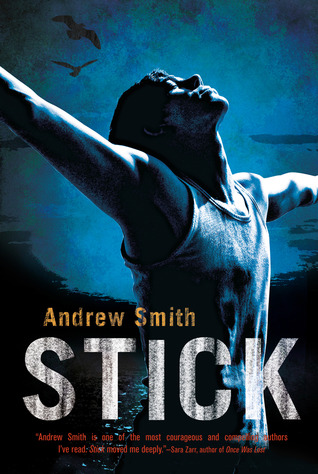
Stick - Book Review


Smith, A. (2011). Stick. NY: Feiwel and Friends
Stark McClellan is a 14 year old boy who is bullied for being deformed.  He only has one ear and goes by “Stick” due to how tall and skinny he is.  Stick and his brother Bosten are extremely close and share a deep brotherly bond.  Bosten is able to stand up for Stick at school and makes sure he is left alone, but the brothers are unable to protect each other from the nightmare they live in at home.  Stick and Bosten’s parents are mentally and physically abusive to the boys.  They are extremely controlling and loveless.  Although Stick has a lot he could be angry and bitter about, somehow he is a sweet and tender individual.  Stick’s only friend is an adorable girl named Emily, who he eventually has his first love affair with.  Stick is even more worried about his home-life after he learns his brother Bosten is gay and fears what his father will do.  Bosten flees home to California and Stick misses him dearly.  He decides to go looking for his beloved brother and meets his loving Aunt. 
This was a very difficult read for me and I would suspect it would be for most readers.  The abuse Stick and Bosten go through is difficult to bear.  I found myself rushing or skimming through those scenes because I could not endure it.  Readers fall in love with Stick.  His hilarious narration and innocence draws readers in just to be disgusted by what he lives through.  This novel makes readers wonder what goes on behind closed doors in some homes that we do not know about.  It is astonishing to me that a character like Stick can still have love for others in his heart.  I appreciate novels bringing difficult issues to light and building empathy for others.  I did not enjoy the darkness this novel brought with it and found myself doing the opposite of what I usually easily do with a novel and that is to get lost in the story.  I fought hard to keep myself guarded from this story. 
To learn more about author Andrew Smith and his literary works, go to this website at:

Me and Marvin Gardens - Book Review


King, A. (2017). Me and Marvin Gardens. NY: Arthur A. Lavine Books
Obe Devlin is an 11 year old boy who loves the environment and takes pleasure in tasks like picking up trash around his favorite creek.  Obe lives in a small humble home by a new housing development built on land that once belonged to his family.  Obe still has strong ties to the Devlin land and learns his family lost their precious land due to his great grandfather’s drinking problem.  Obe’s only friend, Tommy, has abandoned him for his new friends in this new subdivision, who bully and are cruel to Obe.  Thinking of this will trigger nose bleeds for Obe.  One day, as Obe is picking up trash along the creek, he stumbles upon a hybrid animal that appears to be part pig, part dog, and names it Marvin Gardens after the Monopoly game.  Marvin is an unidentified mammal that only eats plastic and who’s waste is so toxic it can melt a road.  The story is told from Obe’s point of view and is creatively interrupted with several sections all titled “One Hundred Years Ago” and is also in a different page color, that gives readers information about the land and family members of Obe one hundred years ago.  Tommy’s friends eventually find out about Marvin who Obe has been keeping a secret.  Obe is able to confide in a trusted teacher, Mrs. G, about Marvin.  Tommy and Obe are able to mend the friendship and Obe finds a way to get Marvin protected while in the wilderness.  Obe is thankful for his time with Marvin Gardens.
This was a lovely story about a boy and the love of his pet.  Although Marvin cannot be classified as a “dog”, the two shared that type of bond.  Obe’s love for the environment and pride for land wan endearing and innocent.  Readers will be drawn to the protagonist’s bravery and wanting to do what is right.
To learn more about A.S. King and her other works, visit her official website:  d https://www.as-king.com/

Running Loose - Book Review


Crutcher, C. (1983). Running Loose. NY: Greenwillow Book
It’s senior year for Louie Banks and he has worked very hard for his starting spot on the varsity football team.  There is high hopes for this season as the team is preparing to have a successful season for another state championship.  Louie also has the prettiest new cheerleader as his girlfriend, Becky.  Things are looking great until a transfer move-in player, Washington, is now a threat on the opposing team.  Louie’s coach tells the team to “take him out” and encourages them to play dirty which Louie protests.  During the game, a teammate takes a dirty shot at Washington and Louie loses his temper.  He yells at the refs and ultimately gets himself kicked off the team.  This is devastating for Louie.  It has been tough to loose football, but Louie’s world is crushed when he hears his girlfriend, Becky, is killed in a car accident.  Louie is able to make it through the tragedy with his family’s support but he still needs an outlet.  Coach Madison see’s Louie is in need and asks if he would run cross-country.  With the help of Coach Madison pulling some strings with administration, Louie is able to participate as long as he is not by any teammates.  Louie ends up racing against Washington, the player he refused to play dirty against and although Louie does not advance past regionals, he is able to use running in other ways. 
As a sport lover, I really enjoyed the message the novel sends with the love and need of sports in a young person’s life.  Sometimes a kid needs the sport more than the sport needs them.  I am always a fan of a story where a coach or teacher steps in and advocates for a student.  These are powerful positions and leave such an impact on a young person’s life.  Although I liked the message, I was disappointed with our protagonist’s decision making in the novel.  I was rooting for Louie to make better decisions and be a bigger person. 
Chris Crutcher is the author to many novels and several sports novels.  His website includes a teacher tab for literary discussions to his works.  You may find this information on this link:  http://www.chriscrutcher.com/